

What I'm Reading: 'A Fever in the Heartland' - and the Americans Who Confronted Hate
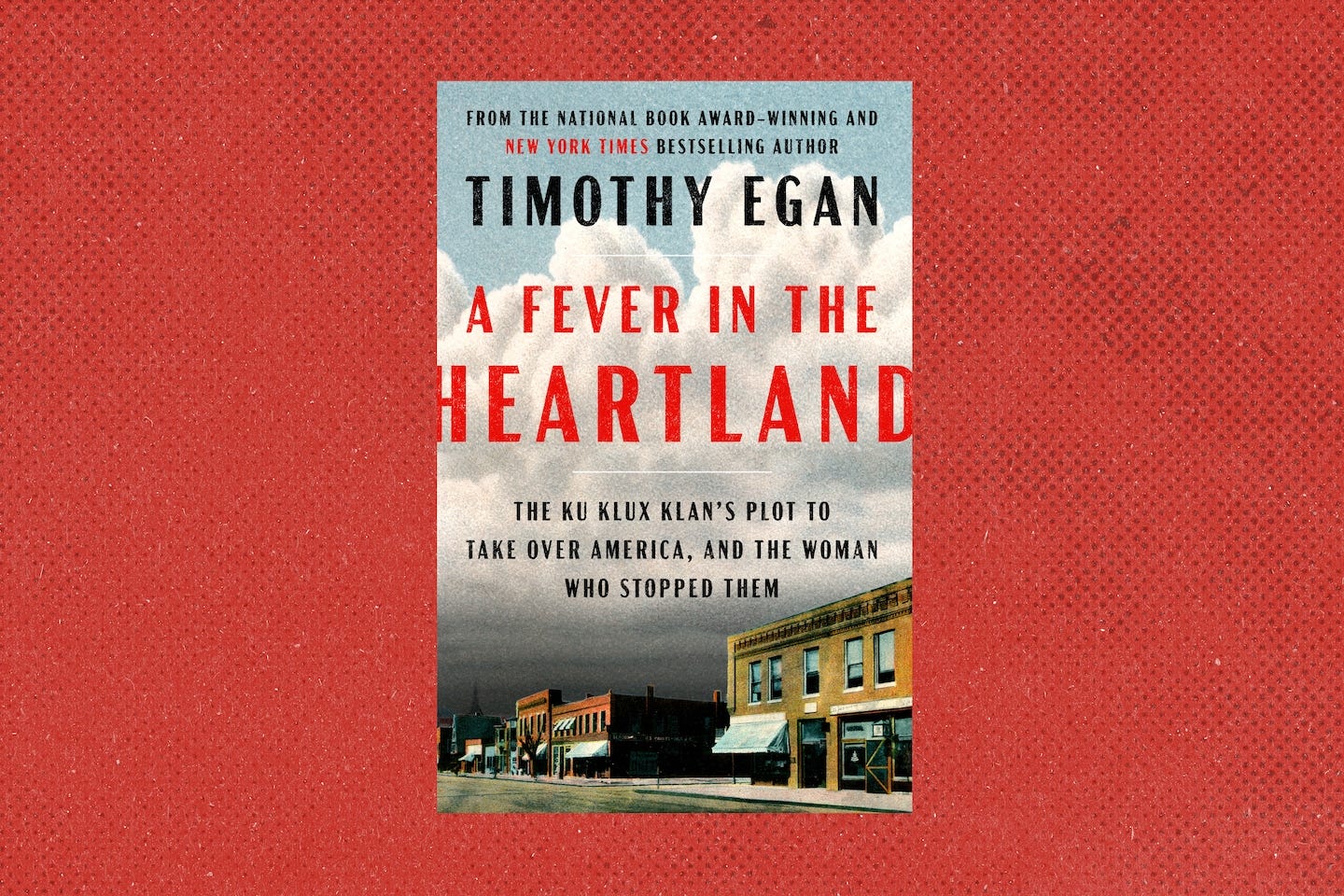
Timothy Egan’s 'A Fever in the Heartland: The Ku Klux Klan’s Plot to Take Over America, and the Woman Who Stopped Them' provides a window into our own times.

Though separated by the passing of a century, America in the 2020s once again finds itself wrestling with the predominant question of the 1920s:
Who is an American?
For many, the 1920s—the so-called “Roaring Twenties”—was a period when the United States shook off the gloom of the First World War.
“It was an age of miracles, it was an age of art, it was an age of excess, and it was an age of satire,” wrote F. Scott Fitzgerald, author of The Great Gatsby and perhaps the greatest chronicler of this slice of American history.
But it was also an age of hate.
“We know this era for its cultural exuberance—flappers and jazz and swanky new buildings reaching into the sky,” writes journalist Timothy Egan.
“But it was also a time when millions of people took an oath to hate their fellow citizens.”
Egan’s 2023 history, A Fever in the Heartland: The Ku Klux Klan’s Plot to Take Over America, and the Woman Who Stopped Them, reveals a dramatic series of events involving the rise and fall of the new KKK and how a young woman’s death at the hands of a prominent Klan figure contributed to its demise.
Woven into the fabric of Egan’s narrative is a grim warning: hate often clothes itself in the attire of patriotism and faith, showing how easily America can fall victim to such deceits.
In some ways, as I outline below, 2020s MAGA America is not so far from 1920s KKK America.
Related post:

Klan ‘needed to be a player’
For Black Americans, there was no idealized, Great Gatsby version of life in the 1920s.
As Egan notes, “A three-week exposé by the New York World in the fall of 1921 had detailed murder, flogging, iron-branding, arson—at least one hundred acts of vigilante violence nationwide.” That year, a White mob burned down some 35 blocks of an affluent Black community in Tulsa, Oklahoma. When the smoke had cleared, dozens—by some estimates, hundreds—lay dead.
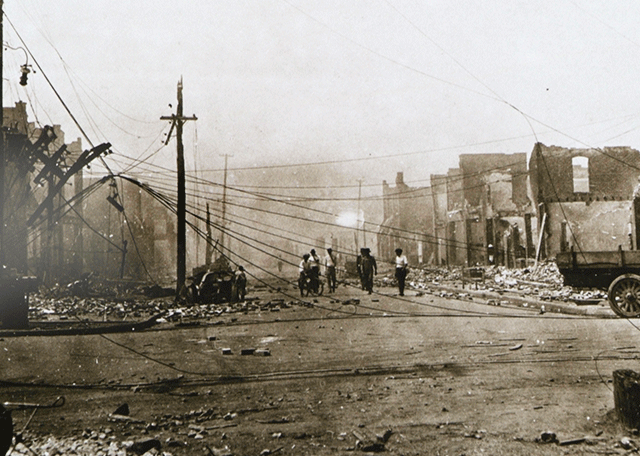
“The Klan of the 1920s had enough control of the legal system to ensure that those who gutted the wealthiest Black community in the United States, a mass murder of American citizens, would not face justice,” Egan writes.
In the 2020s, we can hear the eerie echoes of that period in questions of whether justice can be found for unarmed immigrants gunned down by ICE agents.
As the author recounts in A Fever in the Heartland, the Klan was also driven by a keen sense for public relations and a well-developed blueprint for power.
“If the new Klan was going to stand out, it needed to be a player, and not just when the sun went down. Who cared what a bunch of costumed men did in a basement on a Friday night?” Egan writes.
“What about politics? Writing laws and enforcing the rules? Congress? The statehouse? Real power!”
The 1920s Klan skillfully wrapped itself in the red, white, and blue of the American flag—and marched beneath the cross of Jesus. “There was nothing wrong with promoting white supremacy—it was only ‘race pride.’”
A KKK newspaper characterized the Klan oath as “an oath of Americanism.”
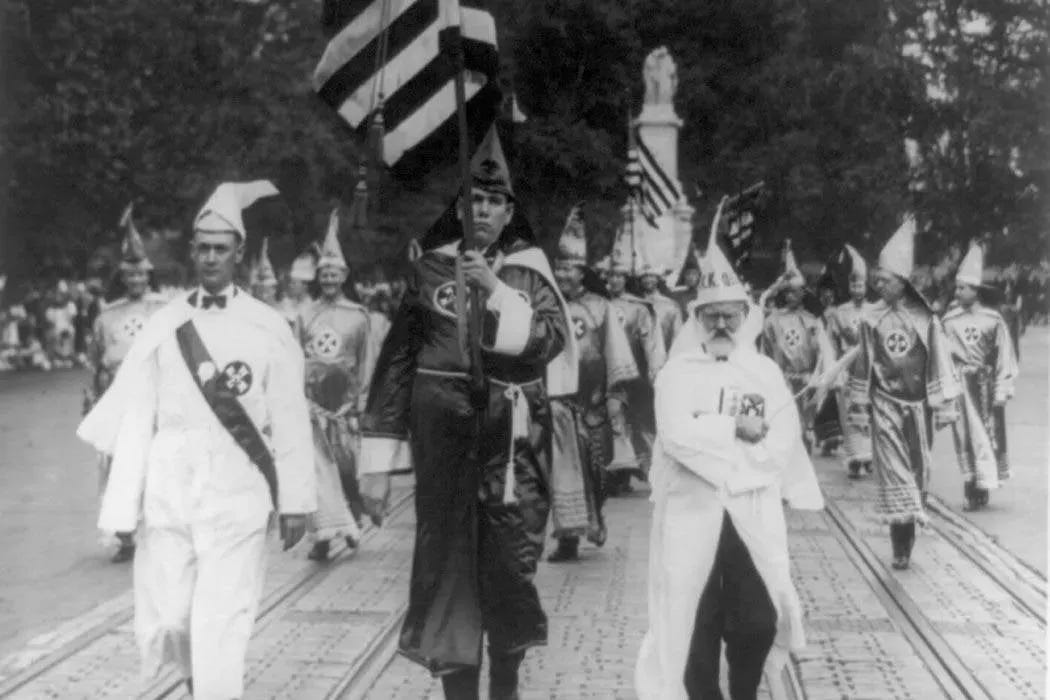
“The flesh burnings and beatings always happened at night,” Egan explains. “By day, the Klan gave out money to charities and churches, and even built an orphanage—Hope Cottage.” They also attempted to create a Klan university that would offer a “one hundred percent American” curriculum.
In the 2020s, once again, far-right forces offer scathing critiques about whether our schools and museums tell the “true” story of America, and state legislators—like in my state of Tennessee—pass laws against teaching “divisive concepts.”
Like with today’s adherents of the “Great Replacement” conspiracy theory, the new Klan became obsessed with putting a stop to the immigration of Europeans who were not deemed to be sufficiently Nordic. It was “a struggle for the rebirth of the White Race and the preservation of civilization.”
Egan notes, “[T]he top objective of the new Klan was stopping the flow of people who could never be idealized Americans. Fixation on designing a more perfect white citizen had become an obsession of the 1920s Ku Klux Klan.” the author observes. “The debate had moved on to whites with a shade of color.”
Again, in the 2020s, Christian nationalists pine for the day when White Protestants like themselves—so-called “Heritage Americans”— will have near-exclusive control over all levers of society.
And an American president, who warns of the “poisoning of the blood of our country,” oversees an administration where the country’s refugee policies are applied almost exclusively to White South Africans.
‘Control of America’
A Fever in the Heartland describes how Klan leaders of the 1920s "had their eyes on an even bigger prize—’control of America by peaceful methods.’”
The focus was no longer just on Black subjugation,
“They wanted to stock Congress with members who’d taken dual oaths, one in conflict with the other,” Egan writes. “In turn, these political foot soldiers would start the process of adding amendments to the Constitution to take away rights given Black people after the Civil War, and to restrict the expansion of certain religions. At least that’s what many in the Klan envisioned.”
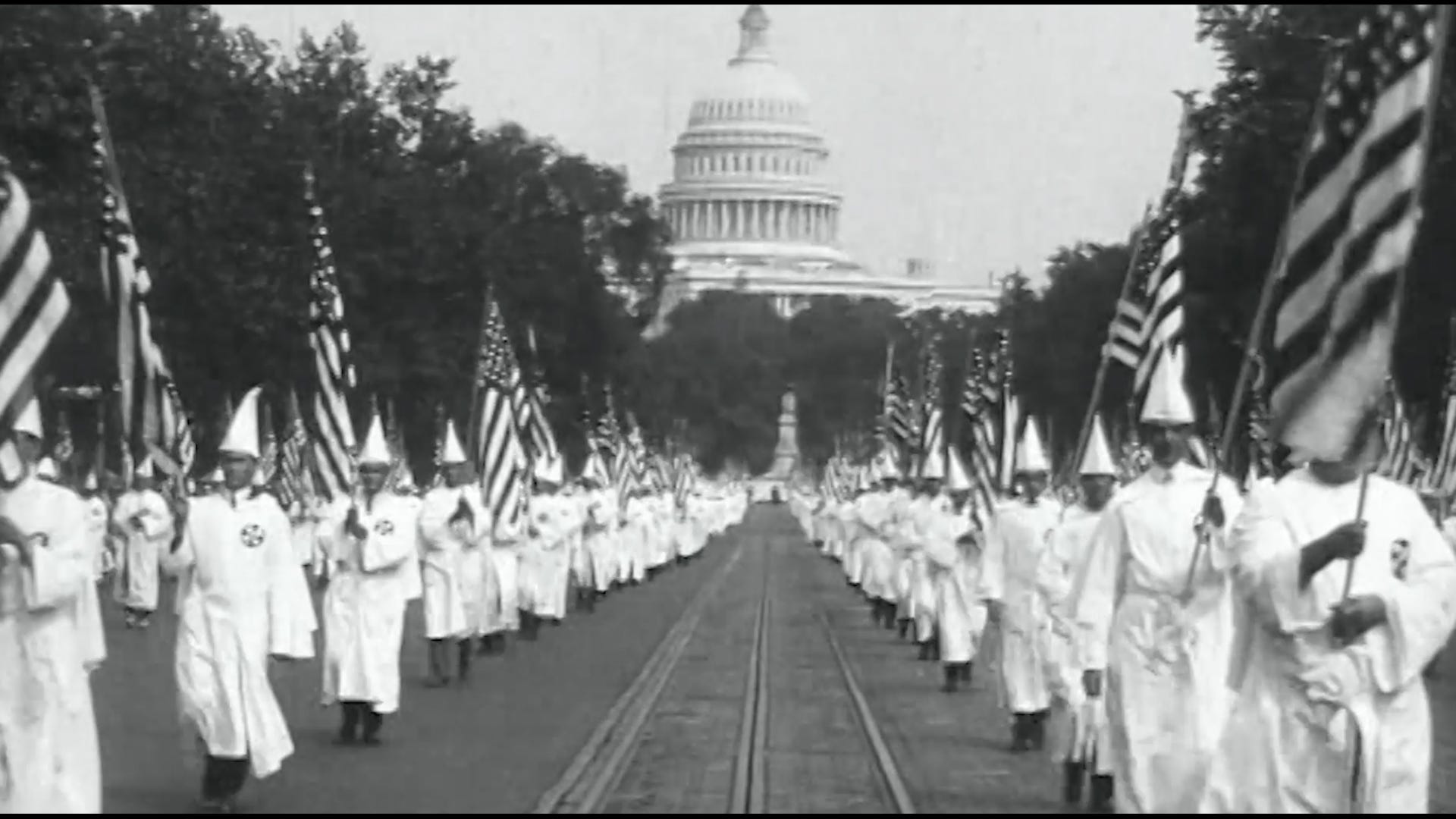
And, among the American public, the Klan found a receptive audience.
“When hate was on the ballot, especially in the guise of virtue, a majority of voters knew exactly what to do,” Egan notes.
By the mid-1920s, an estimated 10 to 15 percent of American White men were members of the Klan, and “the order that had been outlawed a half century earlier had become a major force in the nation’s capital.”
Those efforts paid off when Congress passed the Immigration Act of 1924. It was an immigration measure “that slammed the door on those who could never meet the Klan’s definition of one hundred percent American.”
“Both parties needed the millions of voters who veiled themselves under pointed hoods,” but it was the Republican Party—the party of Abraham Lincoln and the Great Emancipation—where the Klan had become most entrenched.
As Egan writes, an anti-Klan measure proposed for the 1924 Republican Party platform never even made it to the floor of the convention; a similar measure at the Democratic convention failed on a 542-541 vote. “That was a day, said Will Rogers, ‘when I heard the most religion preached, and the least practiced.”
As a result of the KKK’s tight grip on the GOP, Black Americans began to shift their loyalties to the Democratic Party, forever changing U.S. politics.
Find the Hope: An age of resistance
While documenting a dark period in American history, A Fever in the Heartland also tells a story of resistance, of people who refused to cave when it might have appeared that the Klan was unstoppable on its march toward the White House.
Among them were the young men of Notre Dame University—the antifa of their time—who took to the streets of South Bend, Indiana, to stand against the Klan’s anti-Catholic hate, forever solidifying the school’s “Fighting Irish” nickname.
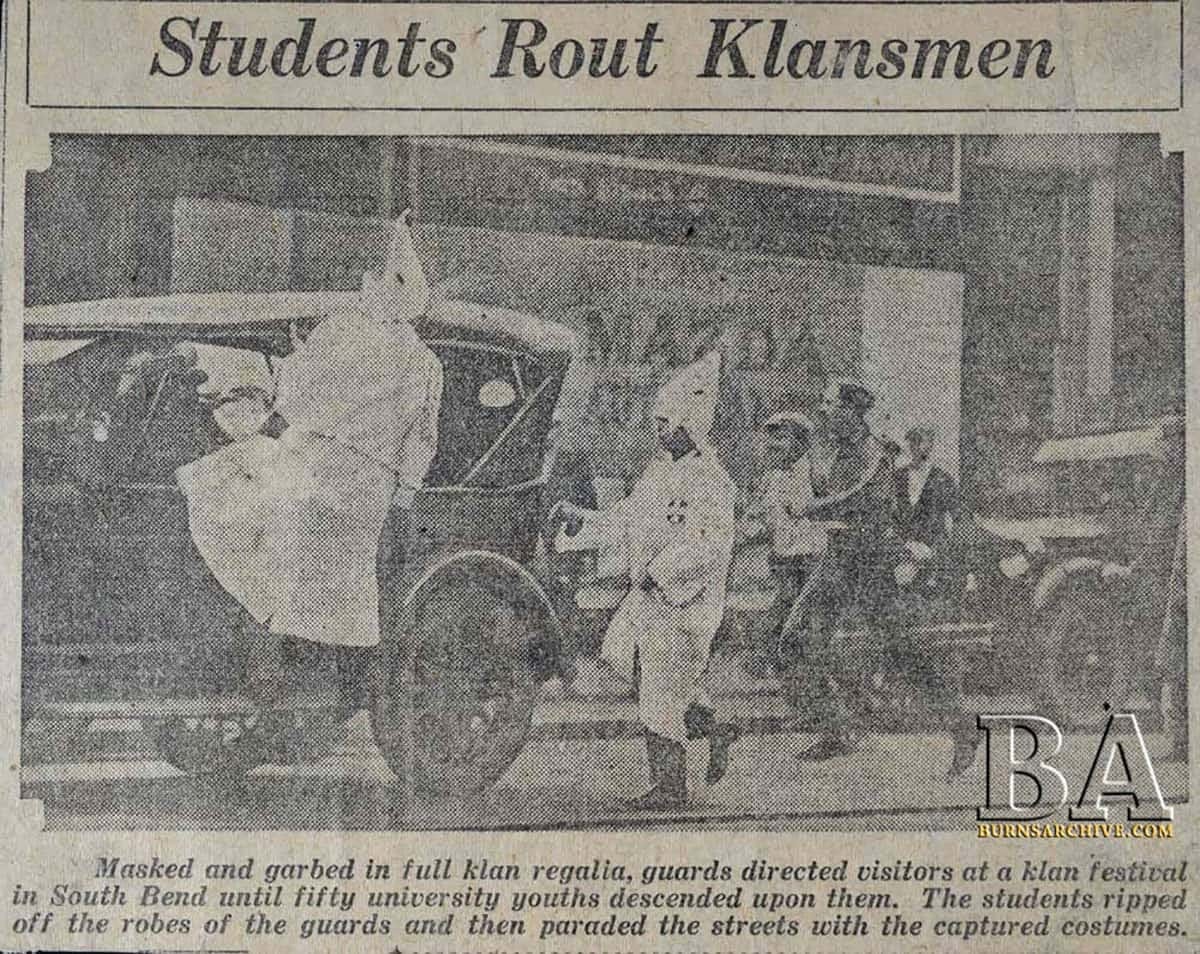
There was the 32-year-old prosecutor, William H. Remy, who ignored pressure to appoint KKK-approved deputy prosecutors, and brave politicians like Congressman William E. Wilson refused to “take a vow and bow” to the Klan.
Perhaps, for obvious reasons, my favorites are the brave journalists who stood against the Klan’s evils:
George L. Knox, a formerly enslaved man, used his influential Indianapolis Freeman to sound the alarm about how the state’s Republican Party had become “the Ku Klux Klan of Indiana.”
Irish-American lawyer Patrick H. O’Donnell launched a weekly newspaper, Tolerance, and began a campaign to unmask the Klan.
And Muncie newspaperman George Dale exposed the Klan’s infiltration of the judicial system, earning him a stint in jail for contempt of court.
In their stories, amidst A Fever in the Heartland, we can find inspiration for confronting—and defeating—the hate of our times.
This sounds interesting. I might try this after I finish ‘Strange People On The Hill’.