

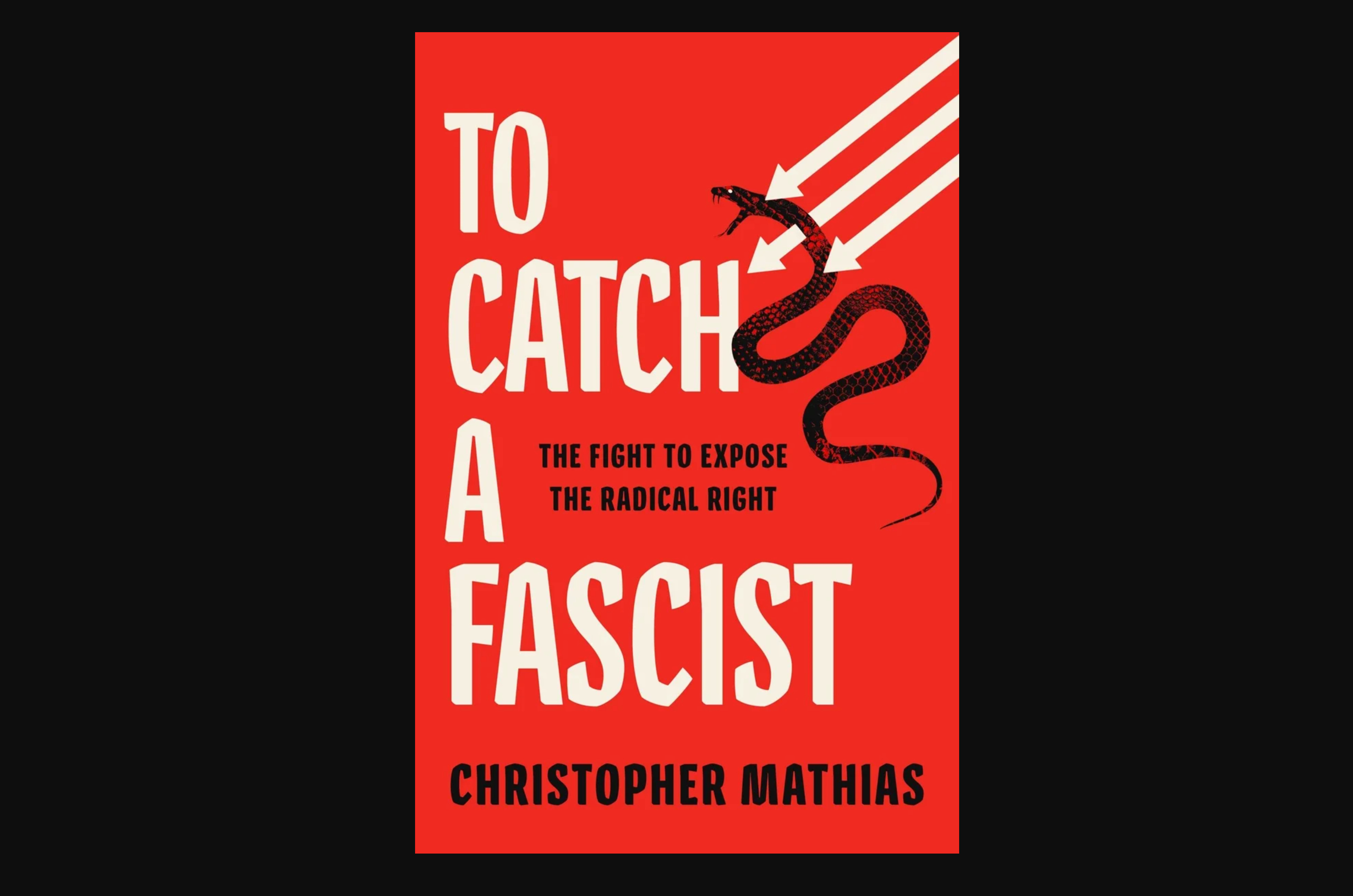
What I'm Reading - To Catch a Fascist: The Fight to Expose the Radical Right
Incredibly well-written with an edge-of-your-seat narrative pace, To Catch a Fascist taps into interviews with some 60 anti-fascist activists to sort fact from fiction."

As my journey continues here on Hate Comes to Main Street, I will periodically share books or articles that I’m reading—or films that I find enlightening. I’d love to hear your recommendations, as well.
For the Trump administration, there is little doubt that antifa is a force for evil.
In September, President Donald Trump signed an executive order officially designating antifa as a “domestic terrorist organization.”
Never mind that there does not seem to be any legal mechanism for the president to apply such a label to such non-foreign entities. (Of course, there is little evidence that the current administration feels bound by the constraints of the law. As we’ve come to see, that’s just not their style.)
Here is how President Trump’s September 2025 executive order describes the anti-fascist movement:
“Antifa is a militarist, anarchist enterprise that explicitly calls for the overthrow of the United States Government, law enforcement authorities, and our system of law. It uses illegal means to organize and execute a campaign of violence and terrorism nationwide to accomplish these goals.”
Which makes Christopher Mathias’s insightful new book so timely.
Incredibly well-written with an edge-of-your-seat narrative pace, To Catch a Fascist taps into interviews with some 60 anti-fascist activists to sort fact from fiction about one of the most contentious issues of the day. Not only is the writing superb, it is meticulously researched and filled with fascinating details that give context to the conversations in which we are engaged as a country.
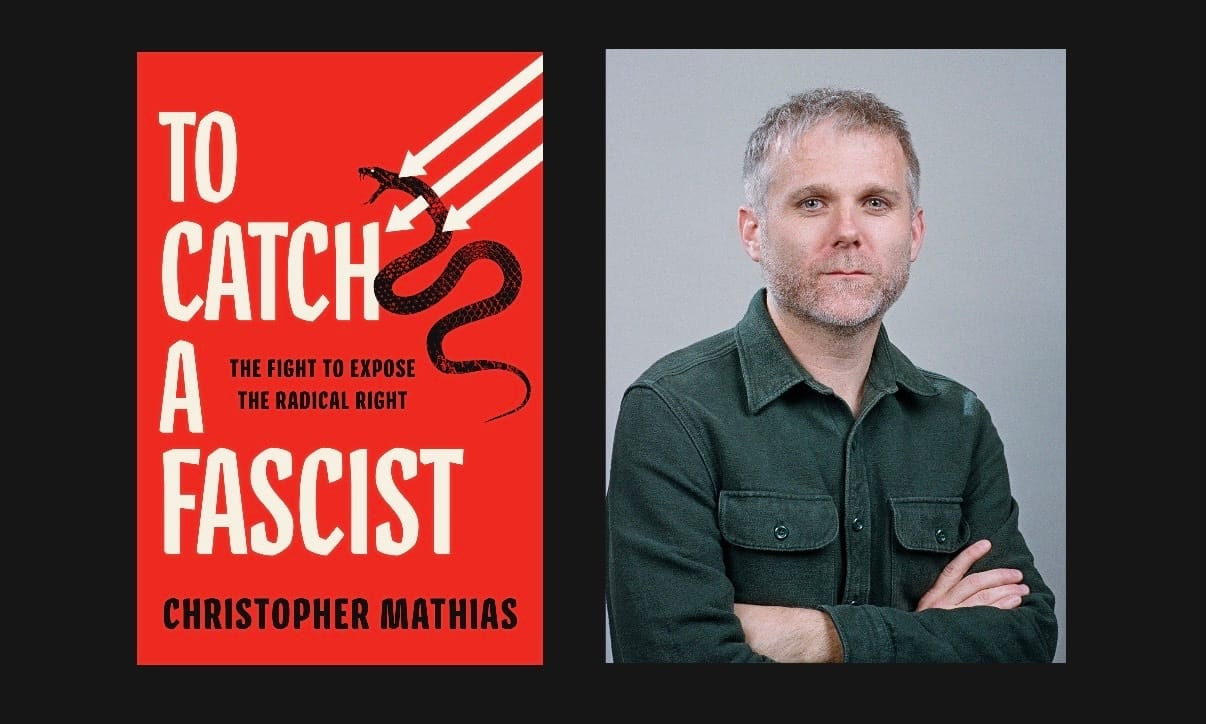
As he recounts in To Catch a Facist, Mathias began his journey into the world of hate and political extremism in Charlottesville in 2017 where he had gone to report on the now-infamous “Unite the Right” rally.
Here is an excerpt from the book’s introduction:
“I did not yet realize that Nazi-punching makes up but a fraction of a percentage of the work antifa does in America. I did not know that in the years to come I would see antifa’s research into the far right and its intelligence-gathering capabilities outstrip any media organization or think tank or law enforcement entity….”
Charlottesville, of course, would become the scene of terrible violence when neo-Nazi Alex Fields plowed into a crowd of counterprotesters in his Dodge Challenger, killing 32-year-old Heather Heyer.
As Mathias notes in his introduction, at the time, he did not know that anti-fascist activists had tried to warn authorities.
“I did not know antifa had spies either, or that even before I arrived in Charlottesville, one such spy had obtained private messages fascists sent to each other ahead of the Unite the Right rally, messages that laid bare their murderous intent for the event—including memes about driving cars through counterprotesters. Antifa had shown these messages to government officials, warning them that the white supremacists coming to town wanted to kill people, and that their rally permit needed to be revoked.”
These days, the Trump administration seems determined to paint antifa with a broad brush, pointing to occasional acts of violence by anarchists in years past as evidence of a vast domestic conspiracy.
While images of political violence may be useful as a political tool to discredit one’s critics—labeling everyone protesting the ICE surge in Minneapolis as antifa, for example—Mathias notes that such rhetoric has “obscured the bulk of the work antifa was actually doing.”
“Across America today there is a hidden army of antifa researchers quietly transcribing every far-right podcast, archiving every tweet from white supremacist accounts, and infiltrating every far-right message board, collecting clues to uncover fascists’ real, offline identities.”
So what is the truth about antifa? Is it a violent movement, a bunch of keyboard warriors, or something in between?
In my next post, I’ll engage in conversation with Mathias about his book.
But, for now, I have a simple suggestion: Buy To Catch a Fascist. (Disclosure: I am an affiliate of Bookshop.org, and I will earn a commission if you click through and make a purchase—but the recommendations are absolutely sincere.)
What do you think?