

'Fun in Fascism': A 60 Minutes Investigation of Hate Misses the Mark
A recent 60 Minutes report highlights the need for journalists to avoid unwittingly playing into hate-group propaganda.

In the world of politics, there’s an often-told story about Lesley Stahl’s time covering the White House for CBS News during Ronald Reagan’s presidency. It’s a tale about the power of carefully crafted visuals in shaping public opinion.
As the story goes, Reagan’s team was masterful about putting the president into highly staged events where the images themselves delivered messages that had been conjured up by the administration’s PR spin machine.
Stahl and her team had used video from those events in what she thought was a hard-hitting report about Reagan’s presidency.
“I did a piece that was, where I was quite negative, to be honest with you, about Reagan—and yet the pictures were terrific, and I thought they’d be mad at me, but they weren’t. They loved it,” Stahl later told documentarian Bill Moyers.
A White House official brushed aside her concerns about them being angry, assuring her that viewers did not get her intended message.
“They didn’t hear you. They only saw those pictures,” he told Stahl.
Reagan’s media master Michael Deaver explained to Moyers, “In the competition between the ear and the eye, the eye wins every time.”
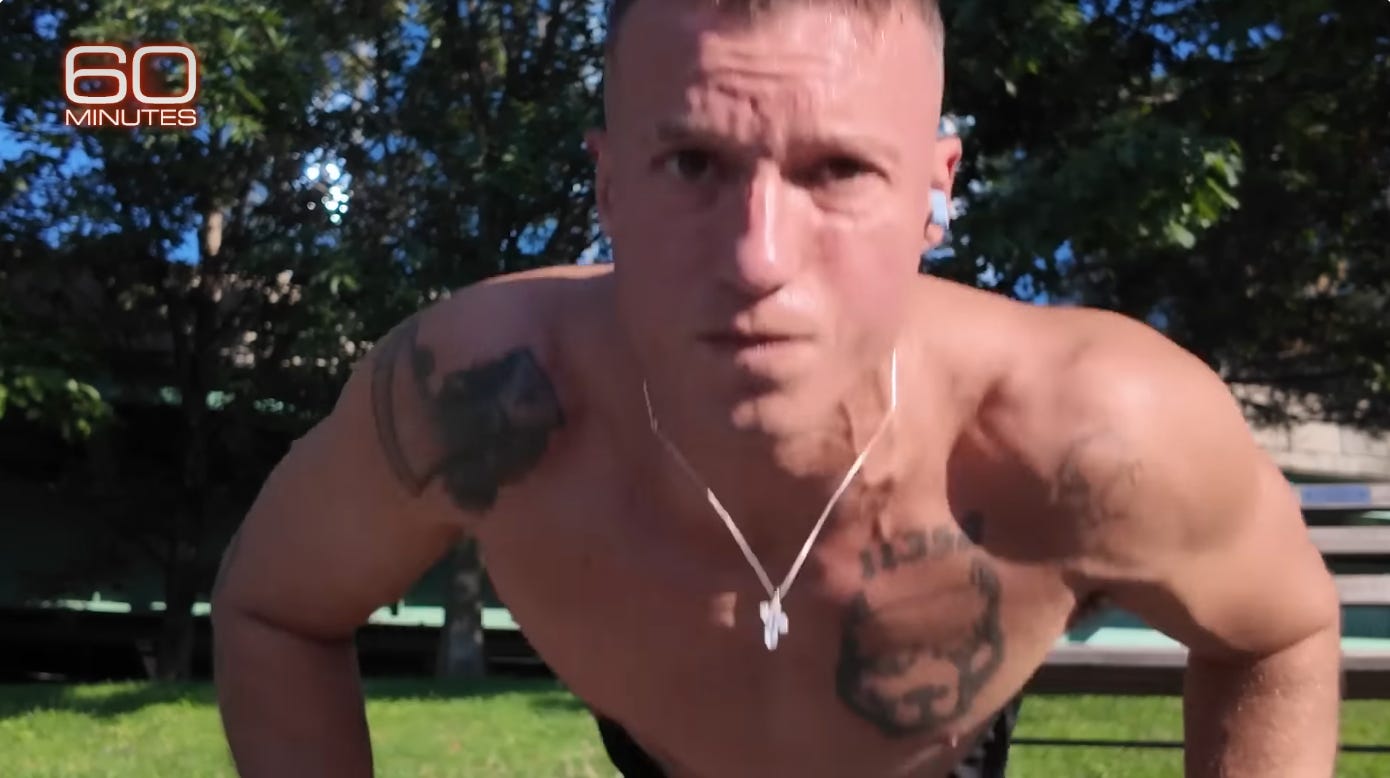
That lesson has never been more critical as journalists attempt to investigate a hate that now wraps itself in wholesome images of men getting fit and, like the KKK of the 1920s, in the glory of the American flag.
‘Fun in fascism’
Forty years after Stahl’s difficult lesson, she and her 60 Minutes team may have been played again—this time, by a handsome, 36-year-old, violent white supremacist determined to remake his public image.
The recent episode of the legendary CBS News program focused on what has legitimately become a grave concern—white supremacists and other extremists who show up following natural disasters to help hard-hit communities. More specifically, they come to help the White people in those communities.
As Stahl noted in her introduction, these so-called “disaster tourists”—a lackluster title, in my opinion, given the subject matter—come “to sow doubt in government, soften their own image, and gain followers.”
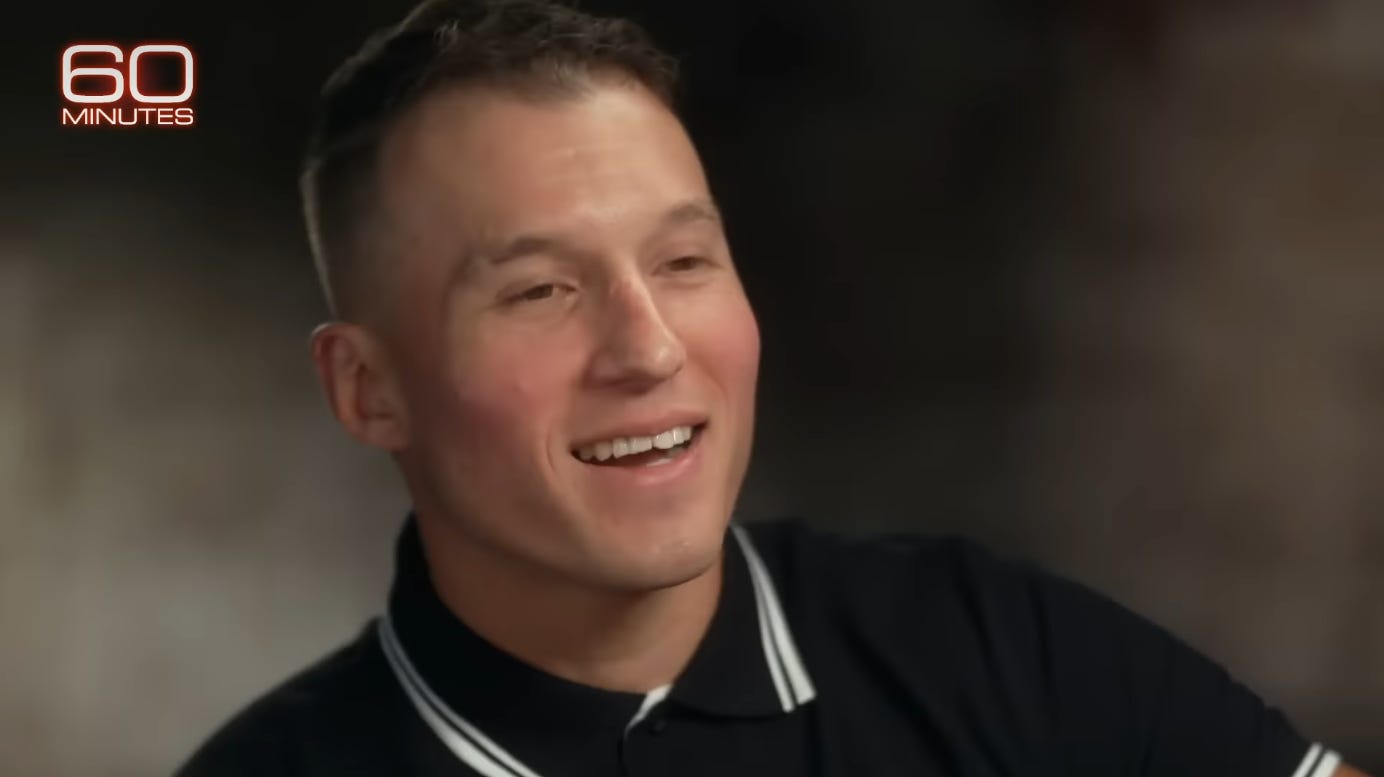
Stahl’s “big get”—as key interviews are described in the business—was Robert Rundo. The self-described fascist from Queens, looking clean-cut and buff, smiled throughout the conversation as he skillfully ducked and weaved when talking about the dangerous Active Club movement he leads.
Extremism experts have described those Active Clubs as “neo-Nazi militias … hiding in plain sight.” That characterization, however, appears nowhere in Stahl’s piece.
Instead, Rundo—who has reportedly drawn lessons from Nazi propagandist Joseph Goebbels—was allowed to spin the reinvention of his movement.
“We get together with the boys, we box, we travel,” Rundo told Stahl with a toothy grin.
The 60 Minutes correspondent was more curious than combative. “You think of it as fun?”
“Of course,” Rundo replied, his face beaming. “There’s fun in fascism.”
Rundo’s Telegram channel later celebrated the 60 Minutes decision to focus on the Active Club movement’s rebranding—what it calls its “3.0 aesthetic.”
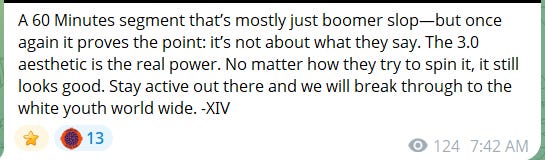
“Once again it proves the point: it’s not about what they say,” one post declared shortly after the CBS broadcast. “The 3.0 aesthetic is the real power. No matter how they try to spin it, it still looks good. Stay active out there and we will break through to the white youth world wide.”
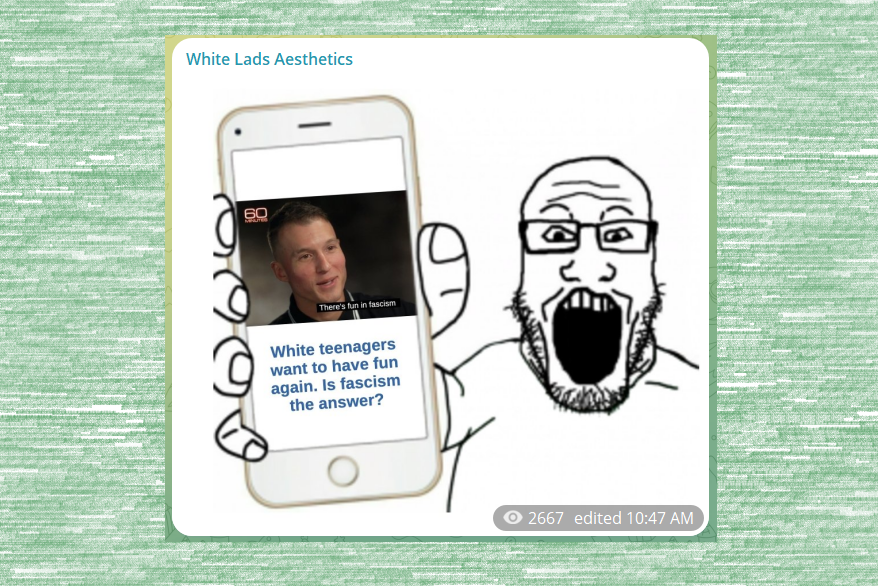
The Telegram channel also reposted the “fun in fascism” moment and wove it into a separate pro-fascism video. And they created a celebratory meme, with the text: “White teenagers want to have fun again. Is fascism the answer?”
Counting the seconds
While obviously well intended, I suspect the 60 Minutes investigation would be an appropriate research project for a communications scholar, measuring public perception as was done following the historic Kennedy-Nixon presidential debate. Audiences who watched the debate thought Kennedy won, while people who listened on the radio gave the edge to Nixon.
(If any member of academia decides to test my hypothesis, please let me know. It might help others to know how to best cover the rise of hate.)
During the nearly 13-minute video, 60 Minutes devoted more than four minutes to Stahl’s relatively light-handed interview with Rundo in which he presented himself as the all-American guy next door. That total also includes b-roll showing the fit fascist and his white supremacist “boys” working out.
“The more macho wholesome image, Robert Rundo thinks, gives young men permission to adopt his fascist philosophy,” Stahl said. To illustrate the point, the story showed the same images that were called helpful for recruitment.
During those 13 minutes, Stahl sheepishly asked Rundo about his well-documented criminal history—”Did you stab somebody?”—and let him redefine himself, as white supremacists now tend to do, without any real pushback.
“I’m a nationalist,” Rundo insisted.
“What does that mean?” Stahl followed up.
“Means I put my people first.”
“Would you say ‘white supremacist’?”
With a hint of a smile, Rundo answered, “No, I think that’s a slanderous term.”
Another 90 seconds focused on photos and videos of extremists helping people who had been left homeless by tragic weather events—the same images that, according to Stahl’s report, “can reach a whole new, large audience.”
Ironically, the 60 Minutes report likely exposed those images to an audience unlike any who had ever seen them before. Undoubtedly, some viewers applauded such groups for going into communities where help was needed, regardless of their politics.
But when it came to visuals of the hate that Rundo represents, Stahl’s 60 Minutes report devoted:
A mere five seconds to a photo of the Active Club leader in police custody,
Followed by ten seconds of video of him punching a man on a California beach “pounding and pounding” after, as Stahl described it, “he got into a series of fights with anti-Trump protesters at rallies.”
That’s just 15 seconds of negative imagery out of more than 750 seconds total.
But even the violent ten seconds of fight video were immediately followed by another ten seconds of a shirtless Rundo shadowboxing in a waterside park, using 60 Minutes’ own cameras to project his preferred image.
Stahl’s narration continued, “He was on the lam when he got this idea to launch a more clean-cut White pride group.”
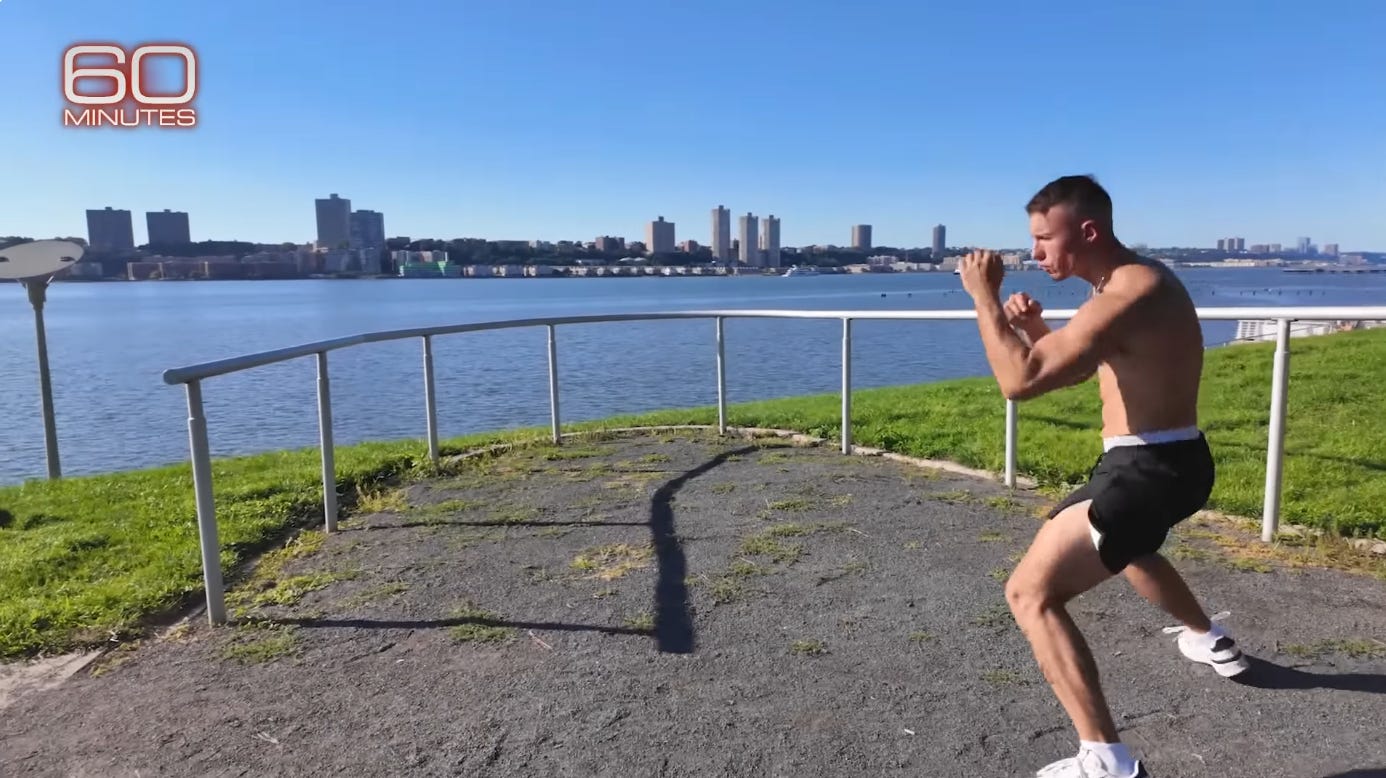
As extremism expert Alexander Ritzmann told me in an interview posted below, Rundo’s Active Club strategy is more than just changing the movement’s vibe.
“The essence of the Active Club strategy is to fool law enforcement into believing that this is just about sports,” Ritzmann said.
“They want to avoid the five o’clock in the morning SWAT team raids that they had experienced previously.”
The rest of the story
While 60 Minutes only told viewers that Rundo “got into a series of fights with anti-Trump protesters at rallies,” he was actually sentenced to 24 months in federal prison after he pleaded guilty to violating federal anti-riot laws.
An opinion from the Ninth U.S. Circuit Court of Appeals describes Rundo and his white supremacist thugs chasing down and attacking counter-protesters from behind, delivering brutal beatings. At one event, a police officer attempted to intervene in a violent assault, and Rundo punched the officer twice in the head.
It was all part of an effort, according to a news release from the U.S. Department of Justice, “to further his white-supremacist ideology by plotting riots and engaging in violence at political rallies.”
“On various social media platforms, Rundo and others posted messages and photographs of themselves preparing for or engaging in violence, accompanied by statements such as ‘#rightwingdeathsquad,’” the DOJ statement added.
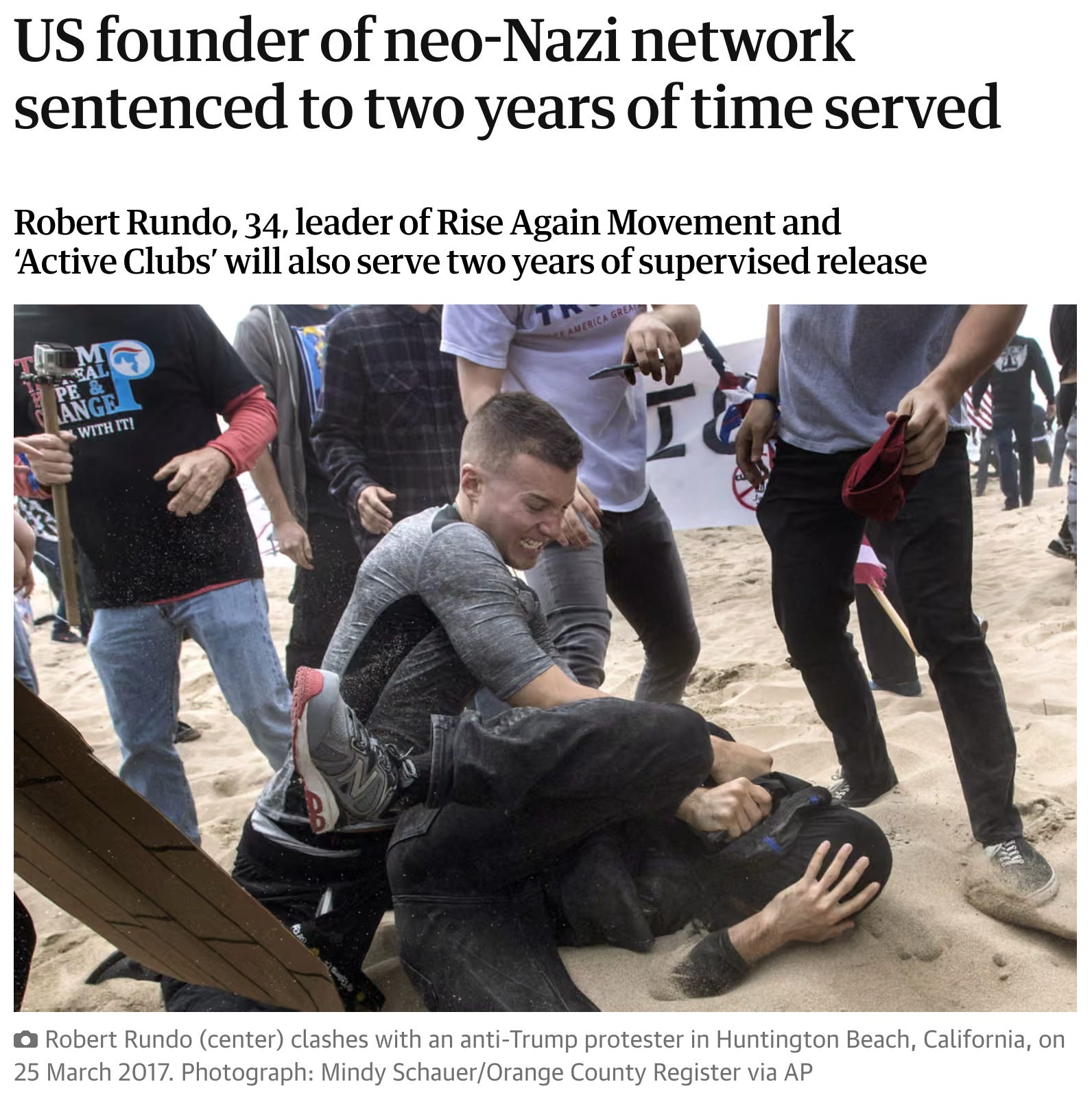
60 Minutes made no reference to Rundo’s “right-wing death squads” or the criminal activity that has been attributed to various Active Clubs around the world, as noted by a recent report from the Counter Extremism Project:
In Germany, police raids targeted suspected members or affiliates of AC Ostwestfalen in October 2025. Their arsenal of weapons “suggests a cell moving beyond unarmed combat training.”
An AC-organized fight event in San Diego was followed by a violent episode where “members of one participating chapter allegedly took part in an assault in Huntington Beach.”
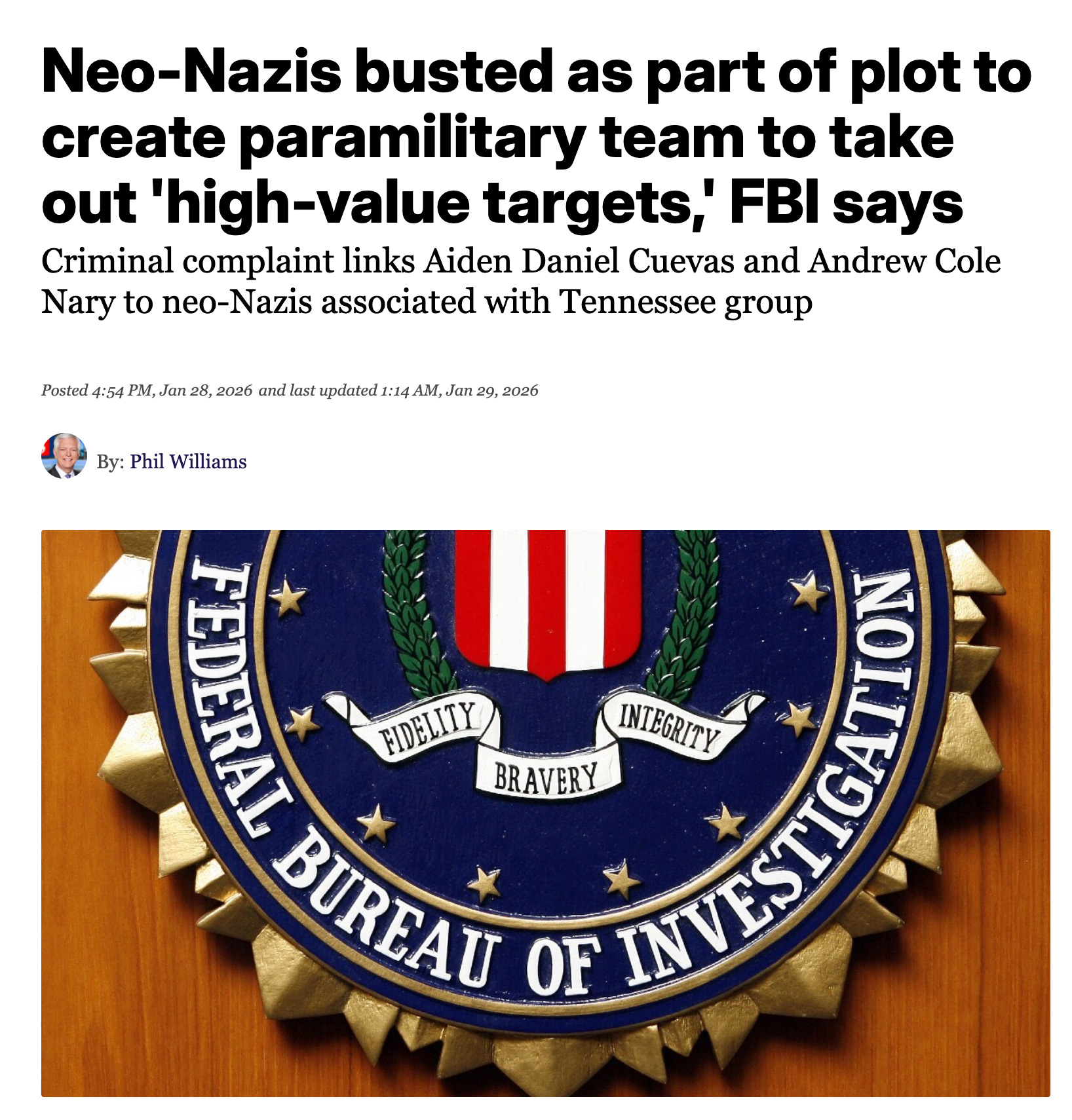
“In an FBI undercover operation spanning 2025, agents infiltrated a network allegedly tied to a Tennessee AC node. According to a federal criminal complaint, members of this milieu discussed building a paramilitary ‘urban assault’ unit and plotted to obtain illegal firearms.” (Read my report here.)
In Sweden in August 2025, “members associated with Aktivklubb Sverige carried out a spree of racially motivated assaults. At least three people were attacked based on perceived ethnicity.” The group posted video showing them “conducting live-fire training with an AR15 rifle and a shotgun.”
Not only was there no mention of such activities in the 60 Minutes report, there were:
No images of the victims of Attack Club violence;
No photos of arsenals seized by police;
No mugshots of white supremacist thugs after their acts of lawlessness had finally caught up with them; and
No confronting Rundo with the harshness of his own words.
Instead, his visual propaganda won the night.
Democracy grievances
Even when Stahl pressed Rundo about his fascist ideas, he took advantage of the moment to espouse sentiments clearly designed to appeal to disgruntled American men who see themselves as having been failed by democracy.
“It’s such a scam, democracy,” he told Stahl.
“It’s politicians that get lobbied. They never have the interest—[is there] anything that’s important that they ever ask us? No.”
In the end, Robert Rundo used his appearance before a network TV audience to deliver a performance indeed worthy of Joseph Goebbels—and 60 Minutes did far too little to counter efforts to normalize his hate.
Were 60 Minutes’ failures the result of the much-maligned efforts by Bari Weiss to remake CBS to be more MAGA friendly—or did the 60 Minutes team simply fail to fully appreciate that they were playing into Rundo’s propaganda?
Certainly, if anyone should have recalled the lessons about the power of visuals in television storytelling, it should have been Lesley Stahl.
What do you think?
Watch my interview with Alexander Ritzmann about Robert Rundo and the Active Club movement below:
Bari Weiss’s influence in how the story was told?